


Islamabad — LHC Order Ignored as Sheikh Rashid Denied Travel
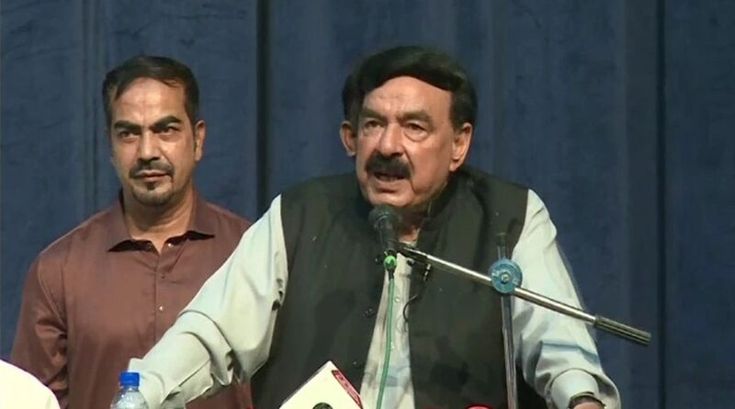
Awami Muslim League (AML) chief Sheikh Rashid Ahmed said he was barred from traveling to Saudi Arabia for Umrah on Wednesday, despite a Lahore High Court (LHC) order allowing him to go abroad.
The senior politician shared a video message on social media platform X (formerly Twitter), claiming that authorities at Islamabad Airport stopped him from boarding his flight despite written court permission.
For more political updates, visit Pashto Times Politics.
Court Had Cleared Rashid for Travel
According to court documents dated October 30, the LHC’s Rawalpindi bench, under Justice Sadaqat Ali Khan, had directed authorities to remove Sheikh Rashid’s name from the Exit Control List (ECL).
The court ruling stated that the anti-terrorism court’s general order for passport impoundment did not apply in his case and that the government had “no objection” to his travel to Saudi Arabia for Umrah.
A copy of the court’s order confirmed that “the petitioner’s name has been removed from the ECL with the consent of the concerned authorities.”
‘Airport Officials Defied Court Order,’ Says Rashid
In his statement, Rashid alleged that two airport officers refused to comply with the LHC order and prevented him from boarding his flight.
“I was stopped from going to Saudi Arabia despite having permission from the Lahore High Court’s Rawalpindi bench,” he said. “The court had directed all officials present in the hearing to comply, yet I was told I could not go.”
Rashid announced plans to file a contempt of court petition against the airport officials, saying that such incidents undermine judicial authority.
“In a country where even a high court order isn’t respected, one can only look to God for justice,” he added.
Background of Legal Cases
Sheikh Rashid’s travel restrictions stem from multiple May 9-related cases, in which he was accused of involvement in protests and unrest following the arrest of PTI chairman Imran Khan.
In January 2024, Rashid was arrested after an anti-terrorism court in Rawalpindi rejected his bail. He had earlier been detained in 2023 as part of a wider crackdown on PTI and its supporters following the May 9 incidents.
For more on Pakistan’s judicial proceedings, read Pashto Times World.
Legal Experts Condemn Non-Compliance
Legal analysts say the incident raises questions about the implementation of court orders and the coordination between judiciary and executive authorities.
They argue that failure to follow judicial rulings weakens public trust in institutions and could have broader implications for rule of law and human rights in Pakistan.
As reported earlier by Pashto Times, similar cases of ECL mismanagement have drawn criticism from legal circles in recent months.
Conclusion
The incident has reignited debate over judicial authority and government accountability in Pakistan. As Sheikh Rashid prepares to file a contempt petition, legal observers are closely watching how the courts respond to what many view as defiance of a direct judicial order.
The episode also underscores ongoing tensions between political figures and state institutions, with potential implications for Pakistan’s broader legal landscape.
